
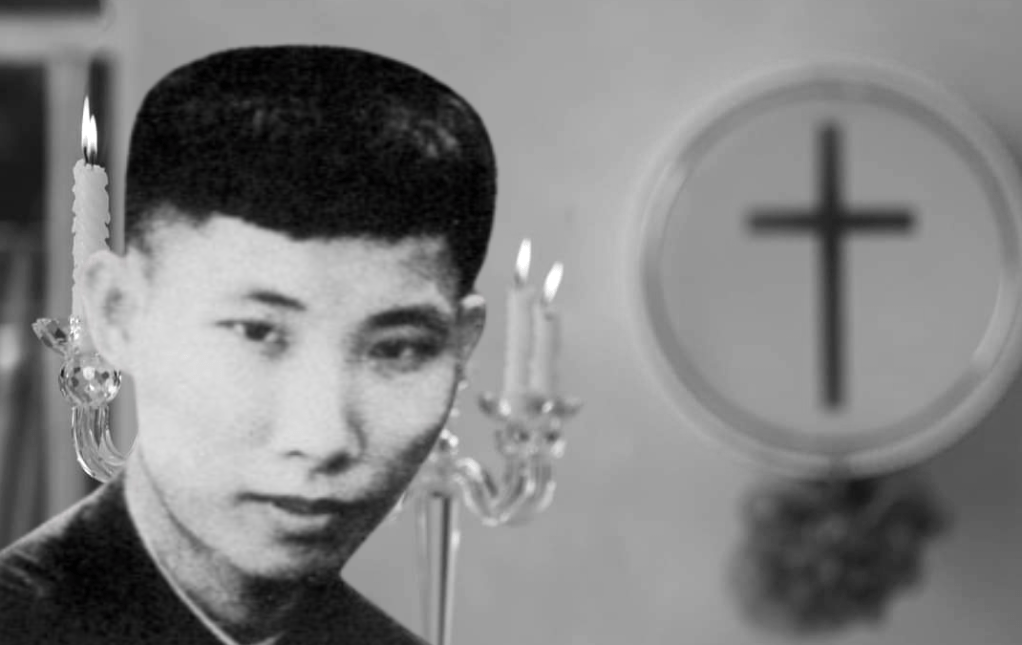
What is your mission?
Ask me this or a similar question, and you’ll get an answer. The answer might make you think I’m crazy. It might make you ask, “And how exactly are you going to do that?” But an answer you’ll get. I won’t leave you hanging.
What do I want to do in the future? What drives me? What do I want my life to focus into? Where am I applying my effort and energy at a convergence of my experience and abilities? What, in short, is my mission?
I have in the past answered forthrightly, boldly, madly, seriously but with no lack of mischief: “I want to reform the Church in the abuse crisis.”
Of course, there are a lot of other things that constitute missions in my life. I want to belong to and contribute to a parish. I want to draw greater attention to the contemplative dimension of the Magisterium of Pope Francis. I want to grow silently in love and so do more good for the Church by that condensed love than could be done by a more diffuse means. I want to heal. I genuinely want a lot of other things, and they rise to the level of mission. They give meaning to the whole shape of my life, past, present, and future.
But one mission which ties together the strands of my life in a way that is unrepeatable and which mobilizes the fullness of my experience—that is as I’ve answered. “I want to reform the Church in the abuse crisis.”
Am I big and powerful enough to make institutional changes? Of course not. I’m not delusional. I can barely lift a finger. I know it. I know it well. But I also have learned that there are no solutions in the world of the spirit that do not apply “poor means,” littleness, and simplicity to create something spiritually new. If you don’t surround the heavy means, laden with momentum, with a light, spiritual potential that can be transported anywhere and entrench itself wherever there is love, then nothing will stick. It’ll all fall apart. A revolution isn’t made with heavy machinery. A reform isn’t a matter of organization. Maybe they are to some extent—but they die without spiritual life in the cracks and the seams.
For every complex problem and integral solution that intersects the human spirit, there is an exigency to think small enough to think big. It’s a fundamental tension of anything that can survive and flourish in the realm of the spirit. God willing, I will think small to think big.
I ended my series of articles on Marcel Văn and clerical abuse with a little manifesto. It outlines what I am inclined to call “the Little Way of Nazareth.” As always, I think Văn provides answers to the abuse crisis which simply cannot be ignored. What I’ve drawn from his writings and experience boils down, in practical terms, to this manifesto. You can focus it all in this direction. It generates a blueprint for contemplation and the abuse crisis. It takes in everything that this blog has explored regarding both contemplative prayer and abuse. This manifesto, this blueprint—it’s my dream. It’s where I am, and it’s where I’m trying to go.
At the end of the 10-part series on Văn and referencing its various parts, I wrote:
Faithful to Văn’s own call to be a “hidden apostle of Love,” I dream that there could exist some sort of network of contemplative prayer.
Faithful to the inclinations of Văn’s heart, this contemplative prayer would be Eucharistic and preferably, when possible, be offered before the tabernacle, not monstrance.
Faithful to Văn’s identification with the Little Way, prayer and sacrifice would be simple and small. For survivors themselves, it would be the Little Way made yet smaller (cf. Part 9). It would take in the demands of resilience (Part 2), rebellion/resistance (Part 3), trauma (Part 4), moral injury (Part 5, Part 6), and whatever other psychological phenomena of abuse survival we become aware of in the future.
Faithful to Văn’s status as a survivor, the prayer would be in union with and offered for abuse victims of all kinds within the Church (clerical abuse broadly considered, including that committed by priests, catechists, religious, and teachers in an officially religious environment, primarily Catholic but ecumenical in scope when the person praying has personal connections) and in support of those who have an active ministry to the survivors (Part 8). It would also do the necessary work of praying for priests, fully aware of the status Văn gives to that requirement and the weight he places on the horror of abuse (Part 7).
And I don’t think this can be a primarily cloistered thing, because that smacks of removing oneself from the problem. Faithful to Văn’s attachment to the mystery of Nazareth, I dream that the people of this movement would be immersed in the lives of others. Whether laypeople or professed religious, they would live like everyone else. They would offer this contemplative prayer immediately before and after Mass times, for say a quarter or half an hour each side. Somehow, even though largely silent, they would be visibly approachable, in some simple way marked and designated, within the parish setting, for anyone to talk to, so that people know, really know, that they can speak the truth and that this person is somehow vowed to listen to, honour, pray for, and offer sacrifices for victims and survivors.
And I would also dream that, wherever this ministry of presence, availability, and prayer is offered, it is offered with the knowledge and approval of the priest and/or bishop/ordinary, so that, even though clerical authority figures cannot be the visible touchstone of this prayer, availability, and presence (for this would render the contact inaccessible for too many survivors), they too are nonetheless offering their commitment to it.
Wouldn’t this realize the mission to be an apostle of Love and to enact the substance of Marcel’s two unfulfilled dreams?
How different would the Church be if such a dream were brought to life! Every Eucharist would remain intact. Nothing within the confines of the Mass would change. Nobody would need to alter anything. But still, everything would be transformed, if you paid enough attention. The gathering of the community would be surrounded by a relatively silent, but partly visible, ministry of presence to, availability to, and prayer for abuse victims and survivors. It would be configured by a preferential option for those abused in a clericalized setting or by a clericalized person. And this would become known. It would become lived. The acts would be small. They would be Nazareth. Nothing would stray from the Little Way. But it would nonetheless amount to a spiritual revolution. We would have the same Church, but a new Church.
Like my dear Văn who has done so much for me, I dream, I dream, I dream. The only question that remains is: Can it be done?


 Contemplative in the Mud