
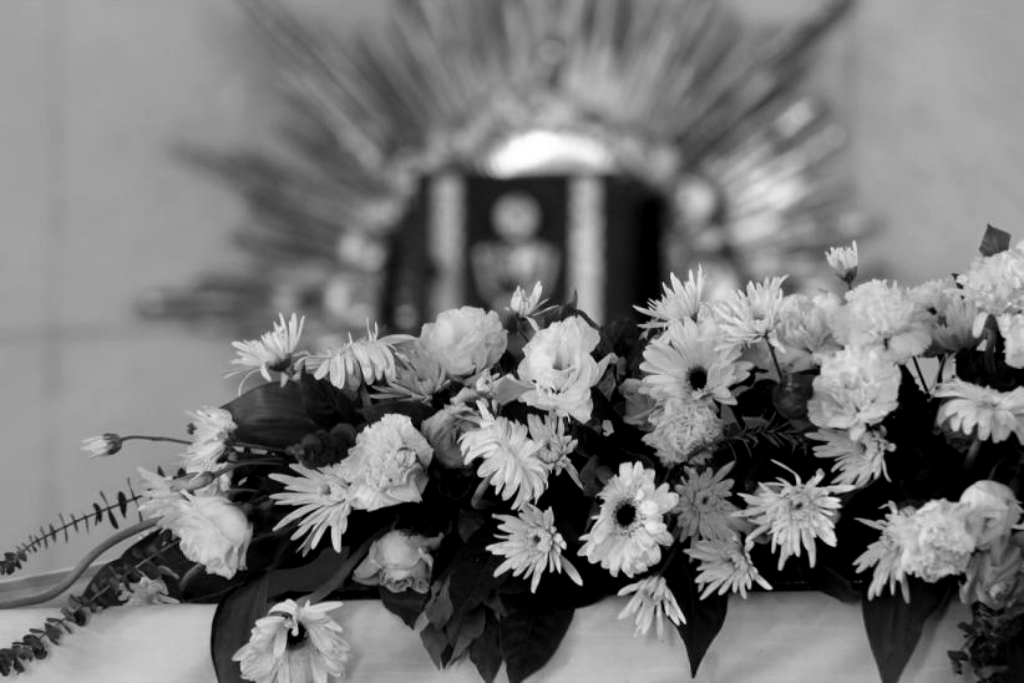
What soul given to Christian contemplation doesn’t like Eucharistic Adoration? On the surface of things, it would seem that the answer would be none! Adoration is silent prayer before Jesus in the Eucharist. The contemplative spirit loves Jesus. It loves silence. It loves silence with Jesus. Something in the contemplative soul must be drawn to Adoration somehow, you would say, at least when painting words with a broad brush.
On deeper inspection, I think you’d find a lot of nuance. For example, when I lived in Bangkok, Holy Hour or Eucharistic Adoration wasn’t actually silent in any of the parishes I knew. There was talking or singing the whole time, often not very well-composed talking at that. I think, under the circumstances, this isn’t necessarily something that a contemplative heart is going to like. Locally, it seemed a disruption of what was universally good in the Church. My inclination might be to pray at another time or place.
Another variation would be what we find in Marcel Văn. Now, don’t get me wrong. Văn loves the Eucharist. He loves visiting Jesus in the Eucharist. He loves talking silently with Jesus. One could find almost numberless instances in the complete works where Marcel speaks of visiting the tabernacle (e.g., A 564, 689, 696; Conv. 33–34, 455, 581, 620, 696, 699, 721; To Father Maurice Létourneau, 12 Sep 1948; To Father Louis Roy, 25 Jan 1949; To Tế, 19 Dec 1954; OWN0.19)[1] and of his assigned position in the oratory relative to the tabernacle (e.g., Conv. 419). He even makes these visits because he “need[s] a little diversion” (Conv. 728), and when he is afraid or nervous he “wish[es] to throw [him]self straight into the tabernacle” (Conv. 742). In one letter, Marcel even tells his little brother that he got used to making short trips to visit the Blessed Sacrament, maybe ten times a day, but only for a minute and a half each time (To Lục, 14 Apr 1953). Times don’t have to be long. They just have to be.
But I think you’d struggle to find such unambiguous praise of Eucharistic Adoration, conceived as time not with Jesus in the tabernacle, but with the exposed species in the monstrance. There aren’t a lot of mentions of this, and some of the ones we do find are surprising. This kind of prayer activity can be associated with postures that end up filling Marcel with tiredness, then suffering and sadness (cf. Conv. 473, 602; To Brother Andrew, 1 Apr 1948). Probably this is down again to spatially and temporally local requirements. Marcel was expected to hold certain physical postures that were too much for a weak body and soul like his. He complied. But these moments were nothing so important as when he could just sit comfortably with Jesus.
Yet that doesn’t explain everything. There are other hints that it is with the tabernacle, not the monstrance, that Marcel Văn’s predilection lies, even when weakness and tiredness are removed as factors.
The first significant factor that leads him to the tabernacle is this. Marcel, as I’ll be delving into over the next month, was a survivor of clerical abuse, and he was deeply, emotionally, psychologically conscious (and psychologically unconscious!), perhaps in a way that few saints and holy people have been, of the sins of priests. Marcel is an intercessor for priests. He has horrible visions and nightmares about their behaviour. He has at least one horrific, prolonged psychosomatic episode. But he intercedes. I’d suggest that a positive prayer of contemplation and supplication with the tabernacle is a necessary counterpart for Jesus “who, in the tabernacle, must listen to the blasphemies of men” (Conv. 542). This is a phrase that is very striking to me. Marcel doesn’t say “in the monstrance,” nor “in the reception of Holy Communion.” He says “in the tabernacle.”
For whatever reason, the tabernacle is where Văn sees Jesus receiving human blasphemies. Perhaps he knows Jesus receives this “pain” elsewhere, too, but this appears to be top of Marcel’s list. Maybe this is because the tabernacle is the most removed from triumphalism and clericalism. Maybe Marcel has no conscious understanding of why he thinks first of Jesus “in the tabernacle.” In any case, that’s how he envisages it: Jesus “who, in the tabernacle, must listen to the blasphemies of men.” It is only natural, then, that that is where he’d want to “remain here and watch” with his Beloved (cf. Mt 26:38; Mk 14:34). On Holy Thursday, he writes:
This evening, I want to watch with Jesus until 10.30. Will you allow me to do that? It is probably the time that Jesus was arrested; I would wish to watch with him to comfort him. (To Father Antonio Boucher, 14 Apr 1949)
This, incidentally, shows that whatever “negative” reasons Văn may have for preferring the tabernacle, they are not a taste for the bitterly anti-clerical or a distaste for the liturgical; there is no more priest-initiated, liturgical form of visiting Jesus in the tabernacle than that on Holy Thursday. Văn may gravitate to the tabernacle, even for intercessory prayer for priests, but this is not because he wants to separate himself from them in bitterness.
Perhaps, though, this all sounds a bit “negative.” He’s tired. He’s living as an abuse survivor. All the weight could be seen as reasons against, rather than reasons for. Granted. In addition to any “negative” reasons for preferring the tabernacle, I’d also add a “positive” one.
There is one text in the complete works of Marcel Văn that really caught my eye—and caused me to write this post and title it as I’ve titled it. When there was a special period of Adoration and Exposition of the Blessed Sacrament at the Redemptorist monastery during his novitiate, Marcel summarized his joy like this: “My greatest happiness during these three days will be to have been able to visit Jesus in the tabernacles of the whole world” (Conv. 312). He uses similar language again elsewhere (cf. Conv. 466–467). The monstrance basically served our little brother as a gateway to all the tabernacles of the world. He almost saw through the monstrance in front of him to reach something else: Jesus present equally in every tabernacle of the world. It’s almost like the monstrance, though more immediate, is secondary. What is primary is that Jesus is everywhere, and with this portal-on-pedestal I can jump to him everywhere.
We can see this pattern of thought at work in Marcel’s correspondence also. One of the priests he knew and loved especially had had to move back to Canada. Marcel writes to him:
I have not written to you for a long time. I always keep the memory of you, but I must hide this memory in Jesus in the tabernacle. (To Father Edmond Dionne, 12 Sep 1948)
When distance separates them, the closest he can get to his friend is through and in the tabernacle. It’s like a spiritual teleporter. This is quite the fantastic way to think of things, but it’s no less theologically accurate for that. All the tabernacles of the world do have the same Presence in them.
As far as I can tell, no passage in the complete works of Marcel Văn gives a full, reasoned explanation for what underlies all these preferences. Nothing explicitly argues out why Văn talks about the tabernacle the way he does. But I do have a suggestion. Marcel knows that God “pitched his tent among us” (Jn 1:14). A tabernacle is exactly that: a tent, a dwelling. Văn’s heart, his inclination is towards the dwelling of Jesus at Nazareth. Maybe what ties everything together in a neat bow is that these are manifestations of the same reality: the tabernacle, Jesus in his tent, Jesus in a dwelling, Jesus in Nazareth.
This, then, I leave as an open question. In a spirituality of Nazareth, can we ever make enough room for Jesus, not just in the Eucharistic liturgy, not just in reception of Holy Communion, not just in the monstrance, but in the little dwelling among us, in the tabernacle?
There might be different answers for different spiritualities of Nazareth, but in Marcel Văn’s, I guess, the answer is no.
I hope you’re not tired of Marcel Văn, because next week I’ll start an in-depth series on his experience of and survival of clerical abuse. There are a projected 10 parts in the series, covering everything from the abuse itself to all the ways Văn’s survival manifests itself in his holiness, his life, and his death, not neglecting what this means—or can mean—for us today. This series is the fruit of ten long years of maturation, meditation, and experience. I know it will be a lot, and some of it will be hard-going, but if ever I have any right to beg you to hear me out, I will exercise it here. Please stick with me—and Văn. See you next week.
[1] A = Marcel Van, Autobiography, trans. Jack Keogan (Complete Works 1; Versailles: Amis de Van Éditions, 2019); Conv. = Marcel Van, Conversations, trans. Jack Keogan (Complete Works 2; Versailles: Amis de Van Éditions, 2017); To = Marcel Van, Correspondence, trans. Jack Keogan (Complete Works 3; Versailles: Amis de Van Éditions, 2018); OW = Marcel Van, Other Writings, trans. Jack Keogan (Complete Works 4; Versailles: Amis de Van Éditions, 2018). For OW, additional system for abbreviations explained on page 14, e.g., OWN = notebooks; OWV = various writings.


 Contemplative in the Mud