
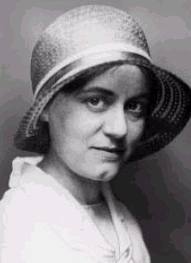
 In her Science of the Cross, Saint Teresa Benedicta of the Cross (Edith Stein, patron saint of Europe whose feast day it is, and martyr, killed by the Nazis) summarizes and reflects on the teaching of the “dark night of the senses” given by Saint John of the Cross.
The onset of the “dark night of the senses”, which is also a precursor (perhaps by several years or more) of the “dark night of the spirit”, coincides with the onset of contemplation. Leaving meditation, beginning to contemplate, entering a dark night: they are all one and the same thing viewed under a different lens. The events are the same. The description and emphasis vary.
What does Saint Teresa Benedicta say about “abandoning meditation”?
The proper time to abandon the stage of meditation has arrived when those three signs we already know from the Dark Night of the Senses occur together: when the soul no longer finds delight and refreshment in discursive meditation; when she is equally disinclined to occupy herself with other things; when she desires most of all to rest totally in God in a general, loving knowledge of God. This loving knowledge is, as a rule, the fruit of many preceding meditations evolving from strenuous reflection on isolated perceptions that coalesce into a habitual condition through long practice… This general loving knowledge is no longer either distinct or particular.
Typically, contemplation is the result of much accumulated theoretical and practical and reflected-on knowledge of God. Of course, in line with our abilities and God’s desire: of course! Contemplation is a gift. But God gives it, of course, when he chooses and as he understands is best for us – an understanding far outstripping our own. He may give it to those whose reflection is, as far as they can tell, less. He may give it to those whose reflection is, as far as they can tell, more. But the signs given by Saint John of the Cross appear nonetheless: contemplation is proximate
when the soul no longer finds delight and refreshment in discursive meditation; when she is equally disinclined to occupy herself with other things; when she desires most of all to rest totally in God in a general, loving knowledge of God.
Indeed, not giving in can have consequences:
All unrest and pain comes from misunderstanding this condition and from a return to reflection that has become fruitless.
Elsewhere, Edith discusses this “crossroad” again:
The crossroad in question here is that between meditation and contemplation. Previously, perhaps using an Ignatian method, one has exercised the spiritual powers in the hours of meditation – the senses, imagination, understanding, the will. But now they won’t work. All efforts are in vain. The spiritual practices that up to now have been a source of inner joy become a torment, intolerably dull and fruitless. But there is no tendency to occupy oneself in worldly things. The soul desires more than all else to remain still… allowing its faculties to rest.
But, as she says, this seems wasteful and the soul worries a bit. In the words of Saint John himself:
Ordinarily it imparts to the soul an inclination and a demand to remain alone and at rest. She is unable to dwell on any particular thought, nor does she have any desire to do so.
Edith considers that this is very united to and very like Jesus on the Holy Cross:
It is no exaggeration when we call the suffering of the souls in this state a crucifixion. In their inability to make use of their own faculties they are as though nailed fast. And to the dryness is added the torment that they are on the wrong path…
The night of the senses was for her a narrow gate (Mt 7:14) that leads to life.
Edith intends to root the dark night of the senses and the onset of contemplation (they are one and the same thing in reality) in the Gospel – in the written Gospel and in the Gospel who is Jesus Christ himself also. That’s the teaching of Saint John of the Cross! It’s also the teaching of the Gospel itself and himself. He will make things simpler. We must try. There is a gate to enter by (Jesus himself is the gate, but we must enter). He will make things simpler, if we persevere and we have as much of the complicated part as is appropriate for each of us. How wonderful our Brother and Father, and their Spirit, are to us! He takes us as we are. He lets us work until he knows, in his surpassing Wisdom and Providence, that we need something simpler. And he gives.
Some related posts:


 Contemplative in the Mud