
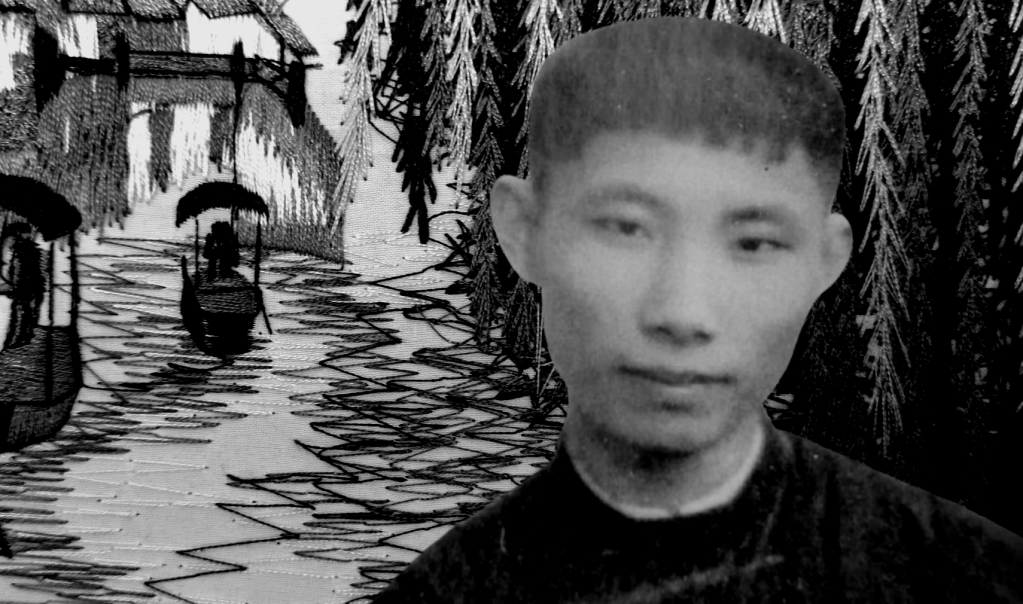
You probably thought this blog had died again. In fact, it was just me who had to die and then come back again. Over the past few months, I’ve been dealing with a psychological atmosphere that is hard for me to breathe; it takes greater time to metabolize—because I do not refuse to metabolize it and suffer the pain of disassociating from the harm and from reality—and the lethargy renders writing a difficult task. I’m now, I think, on the other side of it all, and I’m starting to reflect on what I’ve learned, as well as on what I’ve missed.
Since divine timing is always a major factor in my understanding and self-understanding, there is one aspect of my recent life experience that I can’t let go. Over the summer, I gave a little explanation of Marcel Văn’s poem “I Keep Secret the Wound in My Heart” (OWP18).[1] This was providential. In the months following, I found myself—once again—in similar thematic territory, and it was good to have recently re-screwed my head on properly about these matters. So, as I emerge from this time and start to take stock, I want to return to the same period in Marcel’s life in which he wrote “I Keep Secret the Wound in My Heart” and introduce a second poem that he penned as he went through some important events. This poem is called “Pure Incense” (OWP19).
In the opening part of my series on Marcel Văn and Clerical Abuse, I laid out a lot of the violence that Vietnamese Redemptorist brother Marcel Văn (1928–1959) went through as a child and as a professed religious. Some of it was sexual, some otherwise physical, some psychological, some abusive towards the conscience and the spirit; often these categories overlapped. However, since discussion of it is absent in Văn’s autobiographical writings, I have found it necessary to focus a bit more than most might on the spring of 1951, which actually contained a series of important incidents that explain the material conditions of spiritual abuse and how it feels from the inside.
That’s where “I Keep Secret the Wound in my Heart” comes in. It’s also where “Pure Incense” comes in. The former was written in March, the latter on April 17.
What happened in March can be reconstructed from the correspondence between Marcel and his spiritual director, Fr. Antonio Boucher. Now, because Marcel felt like he had a hard time being understood—since he had certainly suffered a lot of abuse and had been quite precocious and highly sensitive even before that—he had elected to retain Fr. Boucher as his spiritual advisor and friend, even at those times that the two were separated from one another physically. He was perfectly justified in doing so. The laws of the soul allow it. So do the laws of the Church and the Congregation to which he belonged.
With his spiritual director at a distance, however, Marcel needed a separate confessor close at hand. From his correspondence, we learn that his confessor intruded into his private notebooks “accidentally” (To Fr. Boucher, 25 Mar 1951)[2]—an act which psychologist-theologian Joël Pralong explicitly and specifically identifies as “spiritual abuse.”[3] A few days later, in confession, the spiritual intruder then said to Marcel, “I do not know why you’re tempted so often” (To Fr. Boucher, 30 Mar 1951). This comment being so crass and brutal, coming as it did from someone who had inserted himself into deeply private matters without invitation and without a shred of metanoia, was just intolerable. Marcel knew without a doubt that this guy was bad news. On the spot, he upped himself from the confessional and found a new confessor, even without consulting Fr. Boucher about it beforehand. In other words, he tried to give the violator a second chance, but when it became apparent that this was taken as licence for ongoing oppression, he removed himself from the reach of the violent.
This may seem a marginal series of events if you’ve never been through spiritual abuse. To be sure, it is not among the most atrocious things that were done to Văn. But there’s also something sacred about the conscience and the deepest, most interior parts of the soul. To tread on them uninvited is grievous. To callously slap them is horrific. To do the second after the first demonstrates a pattern of behaviour, and the human body knows this. It will always feel it. Marcel’s sure did.
It is perhaps for this reason that Marcel later wrote of 1951 as “the most sorrowful year of my life” (To Fr. Boucher, 1 Oct 1951). The individual sins he suffered might not necessarily have been as grave and as mortal in the offender. But there is more than that at play. After all he had been through in childhood, with the lingering effects of trauma and woundedness in the psyche, and in face of the deafening silence of trying to explain the harm to an ecclesial audience that refuses to hear or remains incapable of listening, Marcel’s words were justified.
This brings us to the poetry. In the midst of the events themselves, Văn wrote “I Keep Secret the Wound in My Heart”. The following month, the verses of “Pure Incense” flowed from his pen:
Forgetting my suffering, I offer you some smiles.
Thanks to the hands of a “Fairy” receive them for your pleasure.
In spite of a thousand sufferings, the flower keeps her lustre;
It has lost neither its fragrance nor its freshness.
“Little Beloved”, here is the incense of my heart.
I offer it to you instead of my prayer.
This poor heart in its dryness
Can but offer you a smile of love.An evening of sadness
17-4-1951
This poem comes with a few notes by the author, so it is not too difficult to piece together its meaning. The addressed “Little Beloved” is the Lord, pictured as the Child Jesus, as was Văn’s custom. Meanwhile, the “Fairy” is St. Thérèse of Lisieux, who for Văn was a kind of patron of abuse victims. Overall, silence reigns. Marcel can only offer his loving silence to Jesus. This is the incense of his heart. Its unvocalized, undifferentiated state evidences a certain purity.
There’s a lot here in common with “I Keep Secret the Wound in My Heart”. After all, both poems are about silence. There is just something incommunicable. It cannot be fully put into words. To try to do so might harm others. Perhaps it would harm oneself, tearing open a wound further. Maybe all attempts at expressing the truth would be fated to improper articulation and thereby end up received badly or too piecemeal. Then again, maybe the je ne sais quoi is even ineffable. After all, it is God who changes our suffering into joy, our sadness into happiness. His workings pass beyond our understanding and so, a fortiori, our words. I don’t claim to know exactly what is going on in the silence. I don’t dare delimit it. But no matter what, we can be sure of one thing: the two poems taken together manifest the silence that cut through Marcel like a sword in the spring of 1951.
This brings me into the present, where I have no answers, only questions, no bundled conceptualizations, only open-ended images.
How long, how long will it be until we realize the delicacy of the spirit? How long until the tremendous warnings of John of the Cross to spiritual directors, the cries of Teresa of Avila, the rebuffs of Thérèse, the anguish of Văn—the list could go on—come to fruition in the Church? How long until a new paradigm has to flatten all the abuse that structures the relationships that we wade through and even the glue that holds the living stones together—for it certainly is no surer and sturdier than glue—and the spiritual bomb goes off, the pieces go flying everywhere, and God stands at the centre and guides all the rubble back into place with a flick of his divine wrist, while the glue and the broken shards are flung into the never-reaches? There aren’t words. Nor is this the only major problem to overcome at this present hour. But all I have is this:
This poor heart in its dryness
Can but offer you a smile of love.
[1] OW = Marcel Van, Other Writings, trans. Jack Keogan, Complete Works 4 (Versailles: Amis de Van Éditions, 2018).
[2] To = Marcel Van, Correspondence, trans. Jack Keogan, Complete Works 3 (Versailles: Amis de Van Éditions, 2018).
[3] Joël Pralong, Marcel Van, le don de soi qui guérit, Une Mission Extraordinaire 21 (Versailles: Amis de Van Éditions, 2021), 66.


 Contemplative in the Mud