
There are certain moments in the Bible where you just wonder what the protagonists were thinking. Sometimes that’s because their choice seems incomprehensible. But other times, it’s because there is more than one legitimate thing that could have been running through their minds—and we just want to know which one.
That’s how I feel about the stream outside Philippi: Why did Paul and his companions go there?
The Acts of the Apostles (16:15) tells us of the Baptism of Lydia in that stream, sometimes dubbed the first conversion in Europe (though that claim assumes that none of the well-travelled visitors present at the Pentecost event had yet made it to Italy or Greece, which is questionable). We’re informed that Paul and his companions supposed that there would be a place of prayer (proseuchēn) at the river (potamon) or stream (16:13). That’s all well and good. But why—why there?
Scholars, commentators, and good ol’ common sense suggest a few potential reasons. One possibility is that the Jewish, proselyte, and God-fearing citizens of Philippi went there because of the need for water in certain rituals; their reasons were pragmatic. Another option might be prophetic denunciation: this place was chosen because of its low-lying position, as streams tend to have, and the contrast to the imperial temples and those of other Greek and Roman gods which lined the slope of the steep, cliff-like hill that hung over the city. Those of this other religion would find their worship somewhere very different.

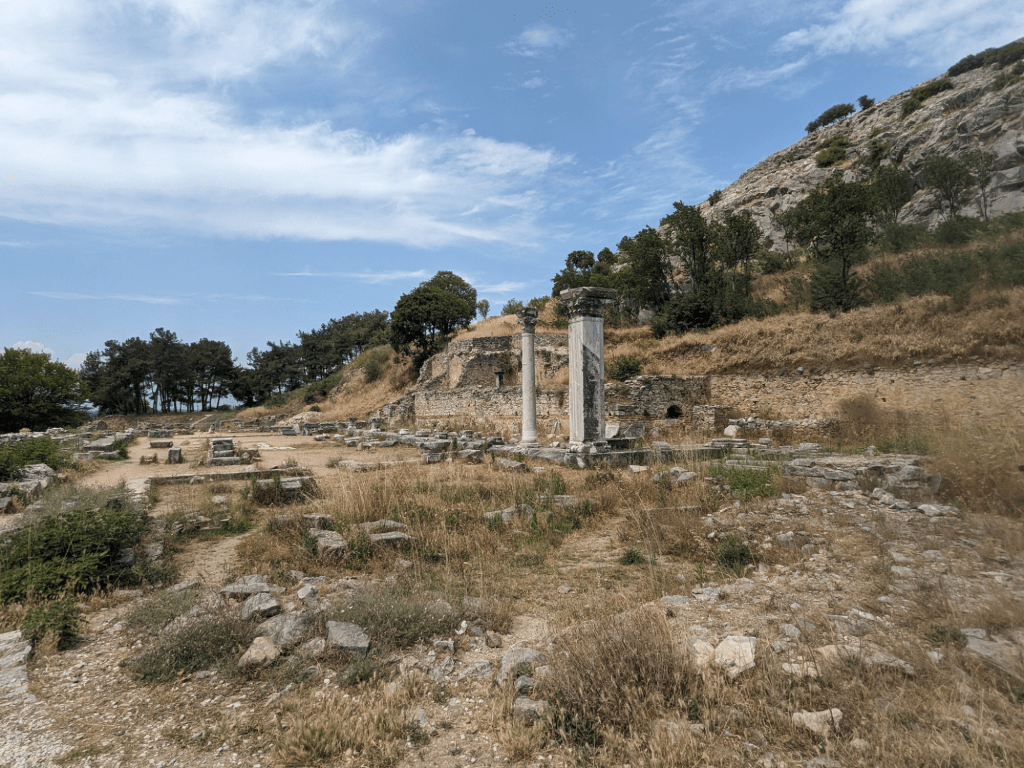

Paul and his companions might have had a third reason in mind, too: going where there is water would facilitate the Baptism that follows in the text. This was a suitable place to announce and bring news of the good reign of God. Of course, these three reasons are not mutually exclusive. Any combination of them could be true. In addition, since it is quite oddly noted that Paul and his companions found a group of women, or led by women, some scholars remark that it is not completely impossible that this was a group of worshippers of some Greco-Roman or Egyptian deity, either ill-adjusted to city life or seeking the divine presence in nature.
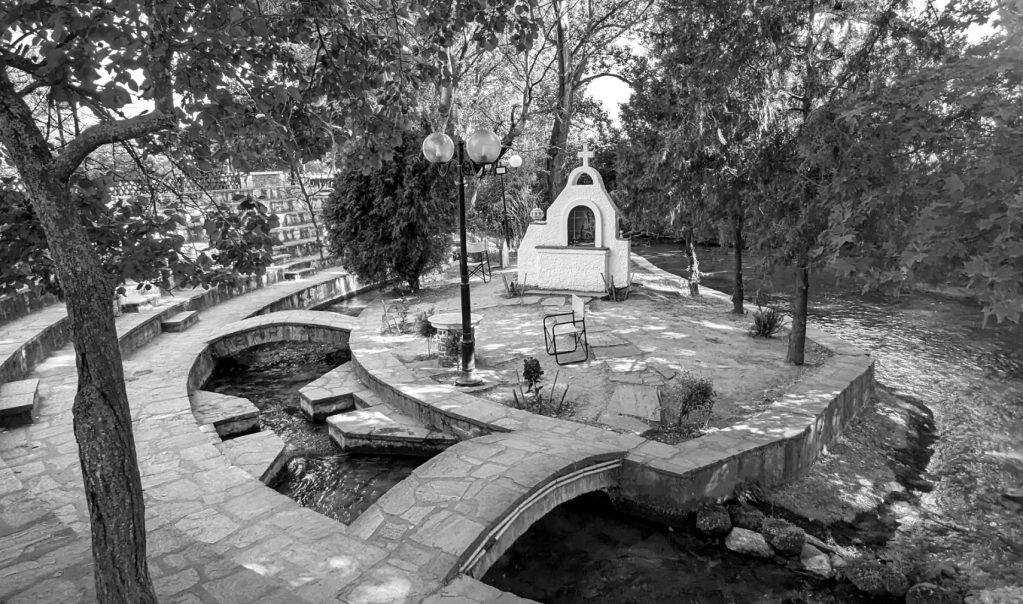
Having been to Philippi and the probable site of Lydia’s Baptism in the stream, I would suggest a fourth reason in addition to the popular pragmatic, prophetic, and evangelical ones—and slightly convergent with the scholarly reasoning about hypothetical pagan women. Maybe we don’t just have three reasons, and maybe the fourth reason can be reframed in thorough-going Christian terms.
One could also opt for this site on aesthetic and contemplative grounds. Quite simply, the location is beautiful. It inspires contemplation of the Lord. Have a look for yourself:
I’m not suggesting that this site’s gentle but captivating character would be the only reason that Jews, proselytes, God-fearers, maybe even pagans, and Paul and his companions would go there to pray. But it’s hard to deny that, when they were there, they would be moved by the Creator’s works, be led to their original cause, and perhaps see them with the human eyes of Jesus.
I think it’s legitimate to ask: How much of the natural beauty of our own place is part of our worship, our liturgy, our personal prayer? And if we have siphoned these off, are we so assured that the Apostles did the same—those who walked with Jesus, heard first-hand of that time, or had the Risen Lord appear directly to them? At the very least, our confidence should waver. Those who saw the beauty of the Resurrected Christ were not, could not thereafter have been, blind to it in his Father’s creation—at least not at a stream outside Philippi.

 Contemplative in the Mud