
Contemplative in the Mud started twelve years ago today. The blog has only been active for about half that time, there being a six-year interruption from July 2017 to 2023—but I didn’t stop thinking even when I wasn’t posting.
From the beginning, what I wanted to create was a space where Christian contemplation is discussed for what it is.
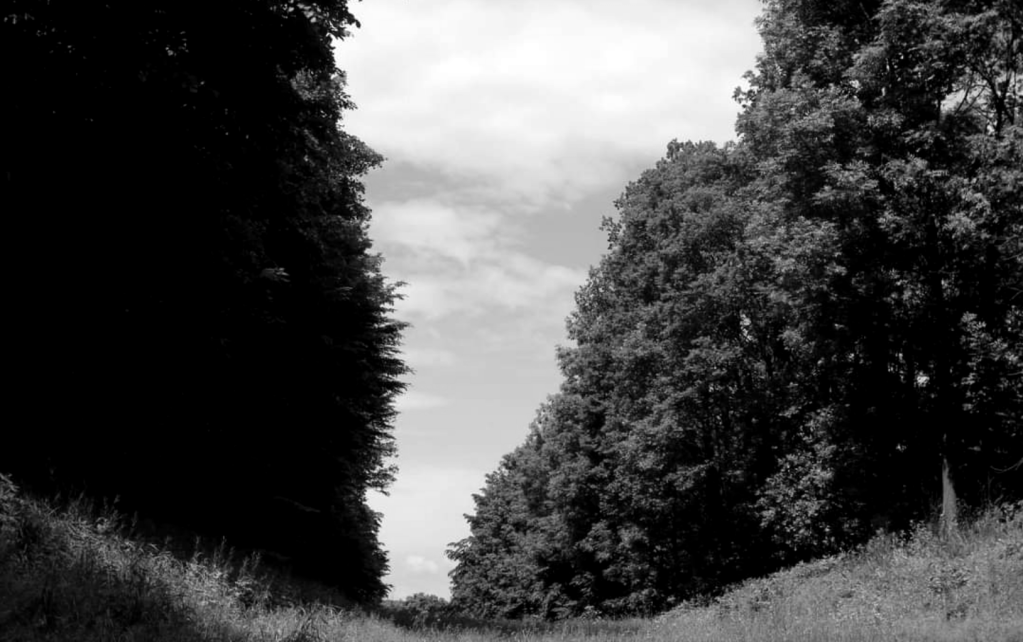
In the early days, the deviations that seemed most necessary to set up a bulwark against were what I’d call, taking a leaf from Heidegger, Holzwege—paths in the forest that lead you out to get wood (for your fire) but which have no destination and ultimately send you back home (to set and tend the fire). There were so many people who thought that Eastern meditation and a bunch of analogous phenomena were Christian prayer. These people still exist (and I’ve had more than one collision course with them, even at the level of spiritual abuse), but their influence, the liberal influence, seems to be waning.
Nowadays, the problem seems to be what Pope Francis has diagnosed as “aestheticism” or “aesthetic relativism.” Beauty is divorced from ethics. And that messes up every thought we could possibly have about Christian contemplation, which the Holy Father has stalwartly insisted is an experience of the beauty of or in grace. To fall into any ideology, e.g., traditionalist, where aesthetics is relativized throws on the brakes to any cognitive understanding of Christian contemplative prayer, and the danger here is that what we actively misunderstand, we only haltingly can manifest in our lives.
My paths—my muddy paths—in the forest are different. They go somewhere. In contrast to the liberal relativism that sees everything as the same and thus throws me back into concerted effort for and by myself with techniques of “meditation” (not what Catholic tradition calls meditation), Christian contemplative prayer has the Holy Spirit as the primary actor and takes us into God: in his nature, in his Three Persons, in our fellow human travellers, and as Creator of this creation we experience. In contrast to the traditionalist relativism that fails to connect all of ethics, aesthetics, and contemplation and thus fails to see contemplative aesthetic experience as a unifier that has to give scope to the phenomenal field, I stand with Pope Francis in his ecclesial revolution that defines in clear terms perhaps for the first time at the institutional level, what contemplation even is and what its various forms are.
Neither deviation will do. Paths in the forest must go somewhere—and they must exist. Or to use a maritainism, on one side, they don’t want to distinguish, on the other, they want to tear apart, but the indispensable attitude is to distinguish to unite. Anything less is going to get us nowhere fast.
Since I don’t have an ideological camp, I don’t have a big footprint. But I believe completely in what I do.
Twelve years ago, I went tentatively into the realm connecting beauty and contemplation, with Marie-Joseph Le Guillou—now I have both Marcel Văn and Pope Francis at my back.
Twelve years ago, I’d never heard of Marcel Văn—now I can imagine neither a day nor my notions of Christian life without him.
Twelve years ago, we were in a different pontificate—now Pope Francis, someone constantly, unjustly maligned as trying to quell prayer life, is the cornerstone of all my reflection on the Christian life of prayer.
Twelve years ago, I should have heard of Titus Brandsma, but hadn’t—now I live in wonder at all the graces he has given me, to survive in situations I could not have fathomed.
Twelve years ago, the abuse crisis was something outside me—now I am resolute in saving every contemplative saint and every contemplative theme from a culture that minimizes the place of abuse in the history of Christian spirituality. On this front, I think I have made contributions that are novel, but well-rooted and long overdue.
I still have so many of my foundations—Jacques and Raïssa Maritain, Charles Journet, Thomas Aquinas, Francis de Sales, Jane Frances de Chantal, John of the Cross, Teresa of Avila, Thérèse of Lisieux, Elizabeth of the Trinity, Charles de Foucauld, René Voillaume, Magdeleine Hutin, Edith Stein, and others—but the roads in these woods are now more developed, better consolidated, stronger, able to endure more wear with the better materials given to me in the past twelve years.
So, thank you for being along for the journey. Whatever cracks are still there between the bricks and cement, may Jesus make and keep us small enough to be carried over them in the palm of his hand.


 Contemplative in the Mud