
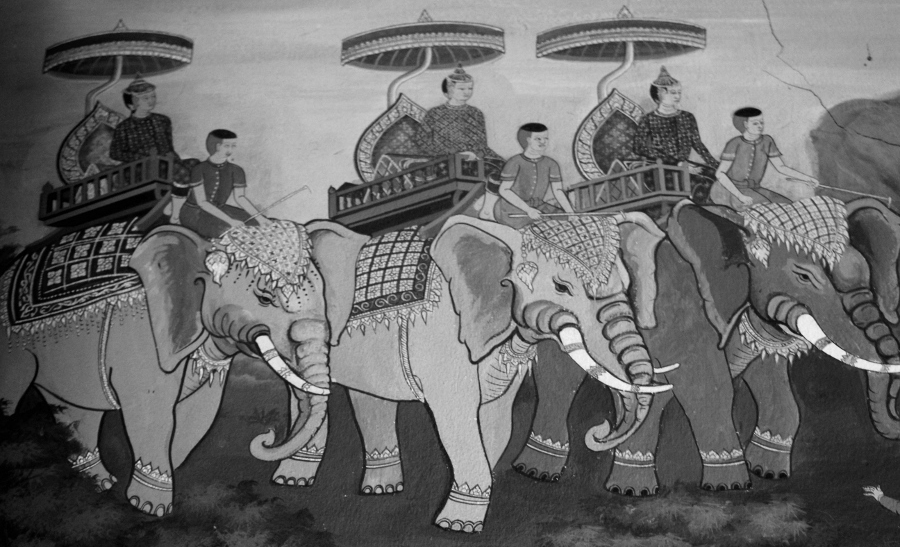
I was wondering which of the many ideas I have jotted down to take up and develop for my next post—and lo and behold! A reader wrote to me with the intention that a gem of a homily of Pope Francis not go unnoticed. Here I am putting that very just, very right intention into action.
Although many national episcopal conferences, including my own here in Canada, defer the celebration of Epiphany to the subsequent Sunday, yesterday was the solemnity of the Epiphany in Rome. Pope Francis’ homily for Epiphany 2024 is a beautiful reflection in line with the heart of this blog. I recommend checking it out in full, but if you don’t have the time for that or would enjoy a guided tour, I’d draw attention to some aspects—not a few of which were pointed out by my attentive, astute reader.
Overview
The Holy Father’s simple, effective homily starts by setting the scene. We’re focused on what the Magi, whose visit is the subject of Epiphany, are doing, why they are doing it, and possible meanings and interpretations for us today:
The Magi set out to seek the newborn King. They are an image of the world’s peoples journeying in search of God, of the foreigners who now are led to the mountain of the Lord (cf. Is 56:6-7), of those who now, from afar, can hear the message of salvation (cf. Is 33:13), of all those who were lost and now hear the beckoning of a friendly voice.
As the homily progresses, Pope Francis draws a more detailed picture. He makes sure we understand that the Magi have eyes that go somewhere, feet that take them, and hearts with a certain inclination: “The Magi have their eyes raised to the heavens, yet their feet are journeying on the earth, and their hearts are bowed in adoration.” In other words, while a meditation on the Epiphany could easily have stayed comfortably enclosed within the imagery of light and phenomenology of sight, the Pope takes us there, then continues on to other dimensions of the human being. He mentions locomotion and the seat of motivation, too.
Each of the physical aspects (eyes, feet, hearts) is developed in its own paragraph in the homily. The parts that tend to have the most resonance with the themes of this blog are the first two. I will look at the eyes and feet aspects.
Gaze, God, Church
First, Pope Francis invites our eyes to follow those of the Magi:
Brothers and sisters, let us raise our eyes to the heavens! We need to lift our gaze on high, in order to be able [to] view reality from on high. We need this on our journey through life, we need to let ourselves walk in friendship with the Lord, we need his love to sustain us, and the light of his word to guide us, like a star in the night. We need to set out on this journey, so that our faith will not be reduced to an assemblage of religious devotions or mere outward appearance, but will instead become a fire burning within us, making us passionate seekers of the Lord’s face and witnesses to his Gospel. We need this in the Church, where, instead of splitting into groups based on our own ideas, we are called to put God back at the centre. We need to let go of ecclesiastical ideologies so that we can discover the meaning of Holy Mother Church, the ecclesial habitus. Ecclesiastical ideologies, no; ecclesial vocation, yes. The Lord, not our own ideas or our own projects, must be at the centre. Let us set out anew from God; let us seek from him the courage not to lose heart in the face of difficulties, the strength to surmount all obstacles, the joy to live in harmonious communion.
This beautiful, challenging passage does two things for me. First, it reminds me of the contemplative gaze. We have to have our eyes fixed on Jesus. Of course, for the Magi these were physical eyes. But they were also eyes of the heart—or at least are called to be. This will simplify our lives. It will make us become better neighbours in the world and in the Church. We will see straight to the essential and want to act on it.
Second, this passage reminds me of one in the recent apostolic exhortation on Thérèse of Lisieux. In that, Pope Francis noted how the Little Flower had found that the Church had a Heart, this Heart was burning with love, and her own vocation was to “be love” in the Heart of the Church (Ms B, 3v). He then went on to say:
This discovery of the heart of the Church is also a great source of light for us today. It preserves us from being scandalized by the limitations and weaknesses of the ecclesiastical institution with its shadows and sins, and enables us to enter into the Church’s “heart burning with love,” which burst into flame at Pentecost thanks to the gift of the Holy Spirit. It is that heart whose fire is rekindled with each of our acts of charity. “I shall be love.” This was the radical option of Therese, her definitive synthesis and her deepest spiritual identity. (C’est la Confiance 42)
There is—or at least can be—a distinction between the ecclesial institution or institutions (where the institution is the noun), and the institutional Church (where the church is the noun). The Church, in this view, has a heart that is love. The actions that truly flow from the Church’s will, its heart, its seat of options and decisions, are of love, even when diseased and malfunctioning members and systems may lash out without the voluntary assent of the heart. Actions of the ecclesial institution, viewed as a sociological aggregate and network, may be quite otherwise. It is the view of the former that can help save us when the latter is so afflicted and corrupted. In my own reading of Thérèse, I have always thought that her discovery—that the Heart of the Church is love—is a tool of spiritual survival, a tool of survivors. When I encounter this line of thought, it occurs to me that, even if I am abused, I can still be closer to the Heart of the Church. This is true even when those who abuse me are closer to the institution. Let me love, let me be something as small as a little cell lining the wall of an artery or a vein, but I will be, or might be, closer to the Heart of the Church than those who commit such harms or turn a blind eye to them. Reading C’est la Confiance, I felt very affirmed in my experience.
At any rate, Pope Francis seems to have come back to a similar theme. He is asking us once again to see what is not ideological, what goes beyond the juridical, sociological, functional, partial, or partisan in ecclesial realities; rather, we must see what is essential to the Church and forms a habitus in us that is ecclesial, that realizes in this world the Heart of the Church which is love, that is both Church and vocation. We have to see Jesus, whose Heart is in his Body. A contemplative regard for the Church is recommended, if not deemed necessary. We need this in order to avoid becoming, not just enmeshed, but trapped and confined within horrifying scandals, divisions, and ideologies that would drive us from the vocation of her beating Heart. May we accept that vocation. May we get lost in that Heart. May we keep our eyes on Jesus.
Feet, contemplation, Jesus, neighbours
Next in his Epiphany homily, the Holy Father develops a theme that has been dear to my heart since this blog began. Pope Francis says that the feet of the Magi are linked to contemplation. Evidently, we could point out that these are “wise men.” They could have had contemplation in the sense of earthly wisdom, maybe scientific contemplation. But they don’t rest there. They turn towards a Christian reality, which is neither an idea nor a wisdom of this world. Their feet set out. This act takes them, as Pope Francis tells us, to two places. The Holy Father associates the contemplative walk first with contemplation of the Christ Child, Jesus in his own Humanity. Then he ties in contemplation of Christ in his members today, particularly the poor. This section of the homily unfolds as follows:
The Magi not only gazed at the stars, the things on high; they also had feet journeying on the earth. They set out for Jerusalem and ask, “Where is the Child who has been born King of the Jews? For we have observed his star at its rising, and have come to pay him homage” (Mt 2:2). One single thing: their feet linked with contemplation. The star shining in the heavens sends them forth to travel the roads of the world. Lifting their eyes on high, they are directed to lower them to this world. Seeking God, they are directed to find him in man, in a little Child lying in a manger. For that is where the God who is infinitely great has revealed himself: in the little, the infinitely little. We need wisdom, we need the assistance of the Holy Spirit, to understand the greatness and the littleness of the manifestation of God.
Brothers and sisters, let us keep our feet journeying on this earth! The gift of faith was given to us not to keep gazing at the heavens (cf. Acts 1:11), but to journey along the roads of the world as witnesses to the Gospel. The light that illumines our life, the Lord Jesus, was given to us not to warm our nights, but to let rays of light break through the dark shadows that envelop so many situations in our societies. We find the God who comes down to visit us, not by basking in some elegant religious theory, but by setting out on a journey, seeking the signs of his presence in everyday life, and above all in encountering and touching the flesh of our brothers and sisters. Contemplating God is beautiful, but it is only fruitful if we take a risk, the risk of the service of bringing God to others. The Magi set out to seek God, the great God, and they found a child. This is important: to find God in flesh and bone, in the faces of those we meet each day, and especially in the poor.
Everything about contemplation here is what has been styled by Jacques and Raïssa Maritain as “contemplation on the roads.” Without alluding to these great spiritual masters, that is the image used. Contemplation is afoot. “Contemplation on the roads” is also the reality evoked, insofar as we are thinking of contemplation, not of the Divine Essence or the Trinitarian Persons, but of the Humanity of Jesus and of Christ in and active in our neighbours.
This is the section of the homily that my reader thought was not to be missed, and how very right he was!
And John of Avila
All this dovetails nicely with the quote I posted to social media yesterday, on the traditional date for the Epiphany. John of Avila says:

And since you have toiled like the magi in seeking the Divine Child, imitate them in their faith and in their gifts to Him when they found Him. Contemplate God Himself, humbly lying in a crib within a stable, where human reason would never have led the Kings to look for Him.
Pope Francis has told us largely the same thing in his homily for Epiphany this year. The feet of the Magi toil and end at contemplation. Yet the Holy Father adds to this much more. We come into a more 21st-century framework. We emerge from a more cloister-based understanding of Christian life, into the world. There is a lot more of what sounds to me like “contemplation on the roads” or “contemplation in the mud”: seeing Jesus in his own sacred Humanity and in his human members today. But the same notion of reading the Epiphany as a feast of Christian contemplation is present in Pope Francis’ thoughts as it was in the Castilian saint’s five centuries ago.
God is made manifest.
Blessed Epiphany to all celebrating still today!

 Contemplative in the Mud