

The Season of Creation coincides with what has, in recent decades and especially the past few years, become a period of greater frequency and severity of hurricanes, tropical storms, and post-tropical storms in the Canadian Maritimes, where I grew up and have come back to live. And not only this. We now have less snowy, i.e., less wet, winters, which is translating into greater frequency and severity of spring and summer forest fires, impinging too on inhabited areas. Climate change is undeniably real here and seems extremely accelerated in the past five years.
As I write this, post-tropical storm Lee is making landfall here, still with hurricane-force winds, and reminding everyone of last year’s Fiona, which was, while not the deadliest, nonetheless the costliest extreme weather event in Canada’s history.
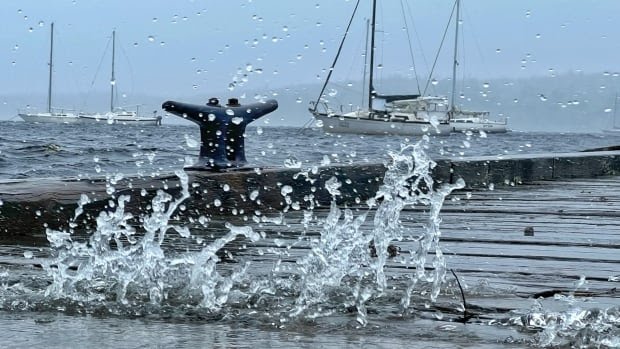
You would think that with all this, with how personal things are, people here, particularly Christians, would consider that climate change and extreme weather events, which are not exactly unambiguously “natural” disasters any longer, are related—and submit to ecological conversion and take action.
But I still hear people complaining about the change… and then driving around in their personal vehicles, for hundreds of kilometers, as if they can’t do anything to help; or not recycling, even though they just have to sort their trash and the municipality will pick it up (cf. Laudato Si’ 22, 280, 192); or denying in word or deed that indigenous and poor people ought to be the principal dialogue partners in the evaluation of any environmental impact (cf. LS 146; Querida Amazonia 26); or going all-in for a consumerist paradigm, both in thought and deed (cf. LS 34, 50, 109, 112, 144, 178, 184, 203–204, 209–210, 215, 219, 232).

Maybe I preach, maybe I rant—but today the winds have thundered, and torn, and trampled, and the rains are yet to pounce, pound, and pierce. Contemplation has a prophetic voice (LS 222; QA 46). Is it unwelcome?
When will we learn? I pray for ecological conversion (LS 5, 216–232). I pray for a recovery of a sense of beauty and belonging. I pray for that contemplation which is our best antidote against the misuse, and thus destruction, of our common home. I pray that we learn this contemplative gaze especially from indigenous peoples (QA 55), and that it has the Christian expansiveness to take in the Creator, the gaze of Jesus, and the presence of Christ in those who suffer from this ecological-social crisis. I pray that I, and we, hear the cry of the earth and the cry of the poor (LS 49; QA 8, 52). I pray that Church leaders and pastors speak out on all of this. I pray that Pope Francis’ apostolic exhortation extending the thought of Laudato Si’ especially to extreme weather events, coming on October 4, does not land on deaf ears.
But as I write this, I hunker down and wait out the storm, realizing that this is a privileged time, a kairos moment, for the experience of the way that God is asking us to walk together. See you on the other side.


 Contemplative in the Mud