
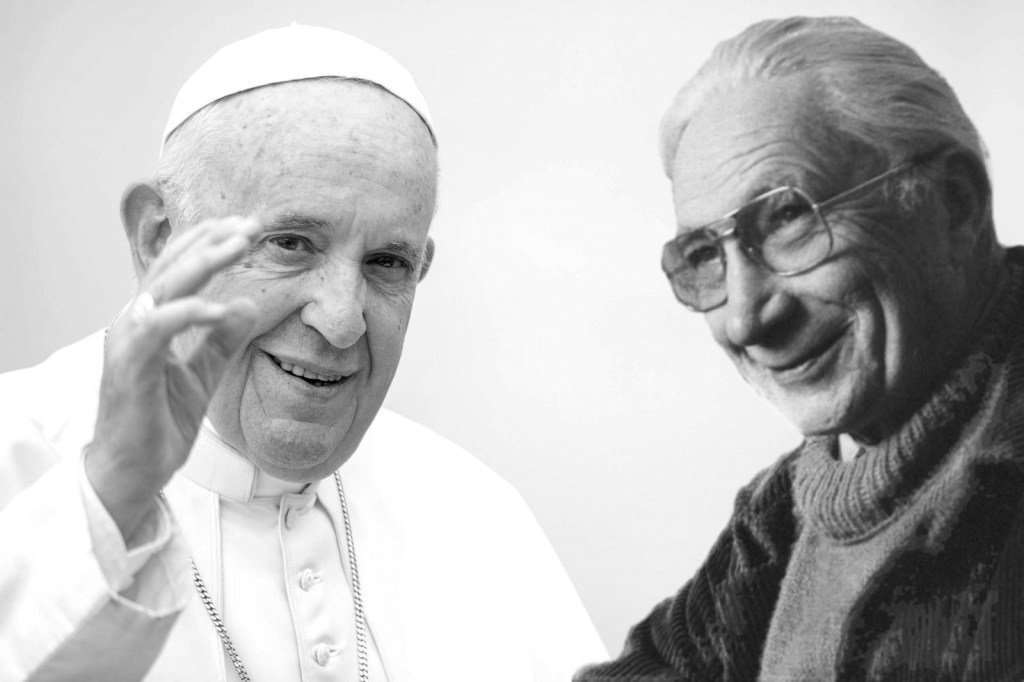
As I concluded my last post by noting, Pope Francis encountered Charles de Foucauld in the late ’60s. In the Holy Father’s own words: “when I was studying theology,” the spirituality of Saint Charles “came to me through Fr [Arturo] Paoli and through the books of [René] Voillaume which I read constantly.” It is a rare and remarkable thing to read someone’s books “constantly.” This implies a real spiritual parentage.
The question to ask is: Just what books related to Charles de Foucauld would have been on the young Jorge Mario Bergoglio’s bookshelf during the years 1967–69 when he was studying theology at Facultades de Filosofía y Teología de San Miguel in Buenos Aires?
Obviously, reconstructing the state of anyone’s bookshelf at any give time is a highly speculative endeavour. I couldn’t even do it with complete certainty for myself! And as someone in the digital age, I have the benefit of electronic receipts stored indefinitely, and there are available digital manifests of books printed in, translated for, or imported to different countries at exactly what time. The history is in large part documented for me. Yet still very difficult. To attempt a historical reconstruction for another person, who lived in another country, spoke another language, at a distance of five decades is simply impossible. There is no hope of accuracy.
Still, it’s important to try. If we don’t, we’ll have not much notion of what “the spirituality of Charles de Foucauld” meant for a young Pope Francis right before his ordination to the priesthood. The contacts with Arturo Paoli and the Little Brothers in Argentina have evaporated, like all contacts do. Time has seen to that. There are no records of conversations and exchanges. At this stage, the only thing we could ever try to recover is a hypothetical bookshelf.
As far as we know, the books will have been exclusively those of René Voillaume. Pope Francis does not mention the books of Arturo Paoli, because the first one only appeared (I think) in 1969, the last year of theological studies for young Jorge.
What books, then, of René Voillaume could these have been?
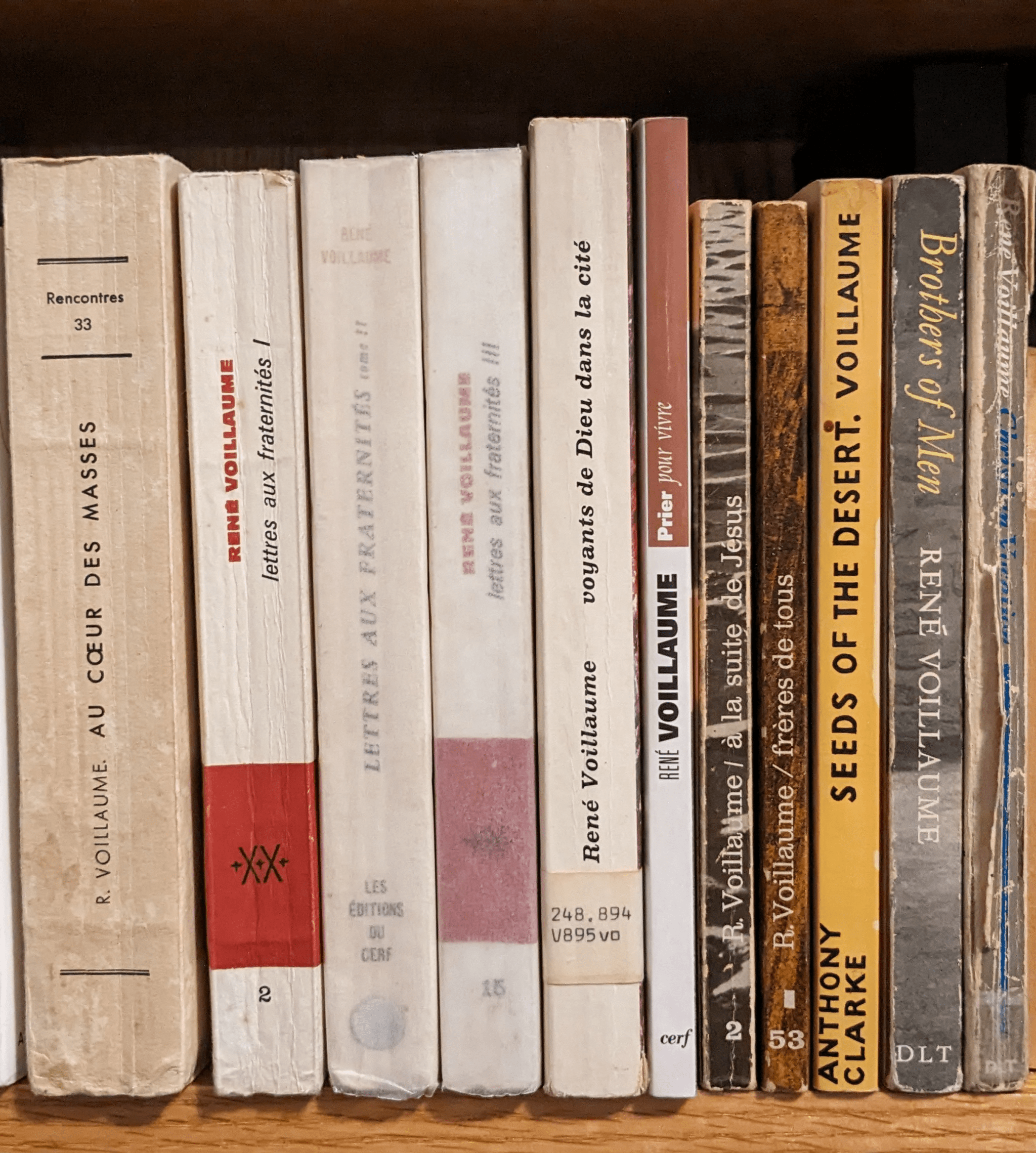
All the French-language versions here are original, except Prier pour vivre, which was republished in 2008 and is thus more easily available as a reprint. The fourth volume of the “letters to the fraternities” series is included for the sake of completeness, but it was published in 1974. The last book on the right is the English edition of Retraite au Vatican; I don’t own a French edition (yet?).
I will give an overview of the books published in French prior to the 1970s. To the best of my knowledge, there are no other Voillaume books in this time period. All of them are pictured above in English and/or French editions.
This will be a long post anyway, so I don’t have space to get into complete reviews of each book. But I want to establish a foundation for what exactly a young Jorge Mario Bergoglio could have been reading. Readers of this blog unfamiliar with the output of Father Voillaume may benefit from having this post as a reference.
I admit to having doubts that our future pope read each and every one of these books. But then again, maybe he did. He does say “the books of Voillaume.” The English translation uses the definite article (though this may not be quite right): the books of Voillaume. If so, he was apparently a very assiduous, loyal, and dedicated reader—but I don’t intend to count on that; my idea here is just to give a hypothetical, speculative list, which is as complete as possible.
1950 Au coeur des masses
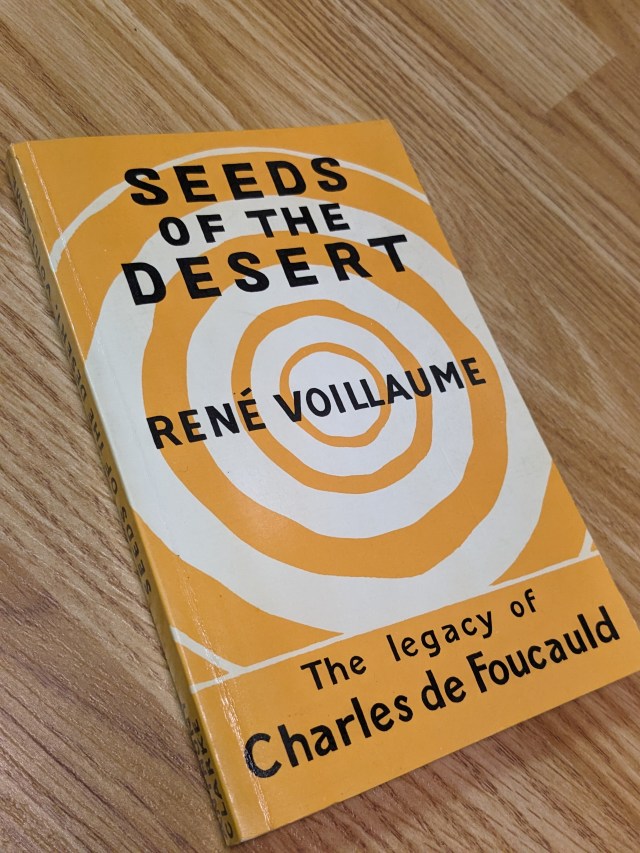
Literally: At the heart of the masses [of people, not Eucharistic liturgies, the word for which has a different spelling in French]; translated into English in a highly abridged form as Seeds of the Desert, which is a very misleading name (for, although the Little Brothers of Jesus began in the Algerian desert and matured some intuitions there, the point of this book is the new situation and vocation of the Brothers living and working among everyday people, often in the city). Essentially about the charism of the Little Brothers of Jesus and contemplative life lived in the working world, an innovation at the time. Went through many editions. First one very different from later ones. Eventually split into two volumes, but not before young Jorge would have likely read it.
Given the fame of this book relative to the others, it must have been one that young Jorge read, at least once.
1960 Lettres aux fraternités I: Témoins silencieux de l’amitié divine
Literally: Letters to the Fraternities [of the Little Brothers of Jesus]: Silent Witnesses to Divine Friendship. The first collected volume of letters written from all over the world, as the Little Brothers were spreading. The topics covered range from the nature of prayer, to the nature of Christian vocation in itself, to the vocation of the Little Brothers specifically, even descriptions of the conditions and situations of life in particular communities on so many of the continents of the globe.
The book, like others in this series, is very engaging because it is “on the ground” and involved in the journey. Both format and content constitute a prime example of time being greater than space, as Pope Francis learned to say. Processes are begun, rather than rigid structures being set out.
1960 Lettres aux fraternités II: Fragments de journal
Literally: Fragments of a Journal. Same idea, but a personal journal rather than letters expedited all over the world from one fraternity to all the others.
The English book Brothers of Men contains extracts from the first two volumes of the letters to the fraternities.
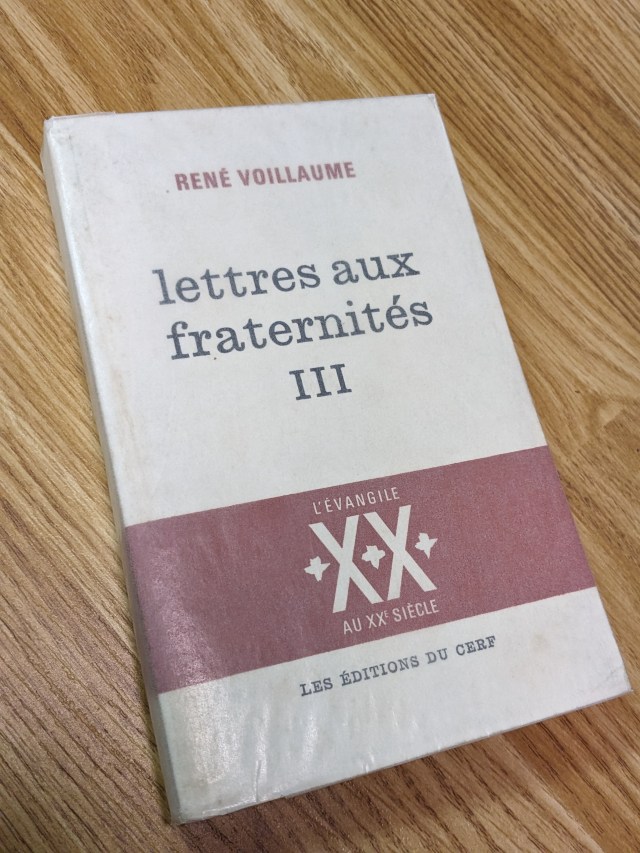
1966 Lettres aux fraternités III: Sur les chemins des hommes
Literally: On the Roads of Men [i.e., Human Beings]. Broadly speaking, the themes tend to continue. The title sounds quite a bit like the word of Jacques and Raïssa Maritain: “The great need of our age is to put contemplation on the roads.” This is exactly what the Little Brothers were designed to do—after their exportation from the desert to the cities, anyway.
1966 Prier pour vivre
Literally: Pray to Live. Covers many different kinds of personal prayer, from vocal to contemplative, including its place in our lives as Christians. Not restricted in audience to the Little Brothers. I wouldn’t say that anything in this book is radically different from other books on prayer that one might find nowadays (though there may have been novelty at the time), but I haven’t reread it in full recently. If I had to pick a book on this list that seems to me to have imprinted itself the least on the future pope, it would be this one.
It is at this stage that René Voillaume moves from speaking only to or about the Little Brothers to tackling questions that concern the Christian community at large. This decisive shift largely coincides with retirement from being superior of the Little Brothers of Jesus, of whom he was also founder, to focusing on the Little Brothers and Sisters of the Gospel, also founded by Father Voillaume, much newer, and likely in need of more concern.
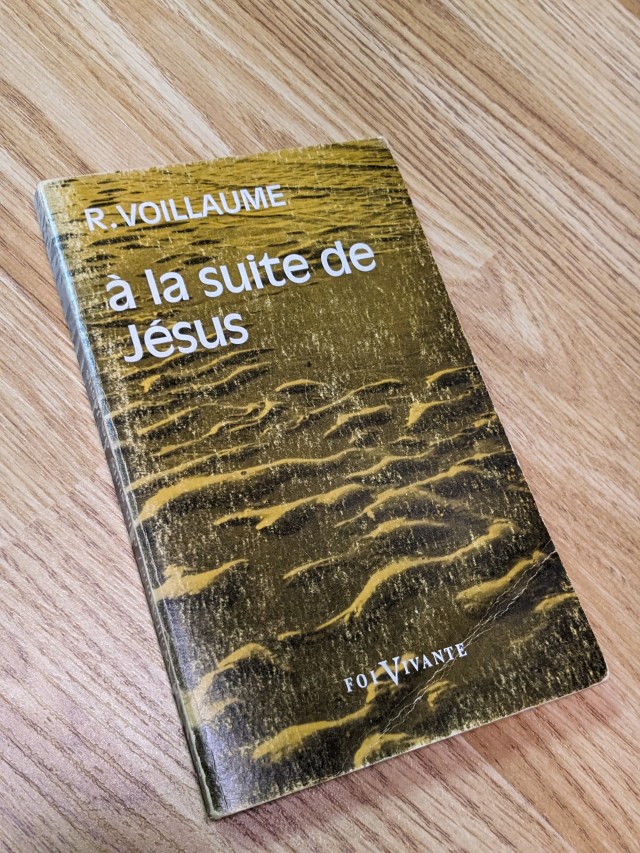
1968 À la suite de Jésus
Literally: Following Jesus. Addressed to religious and to the Little Brothers in particular. Speaks quite a bit of the mysteries of the life of Jesus, including Bethlehem, Nazareth, the Passion, the Resurrection. Final chapter is on being “saviours together with Jesus,” a theme that overlaps quite a bit with Au coeur des masses and the earlier letters series.
Although the theme of “Nazareth” permeates everything to do with Charles de Foucauld, this is one of the more systematic treatments by Father Voillaume. Since Pope Francis speaks quite eloquently about Charles de Foucauld’s perception of this mystery, it is possible some of that contact originated with À la suite de Jésus.
1968 Frères de tous
Literally: Brothers of All. Evidently a book that may have had quite an influence on young Jorge overall. The title is programmatic—both for the book and the future pope.
Brothers of All is bookended by very “Papa Francesco” things. It begins with the dual assertion that “love will consummate everything in God” and “we will be judged on love,” and its last page has as its heading, “The joy of God is given to us in Christ.” The former reminds one of the adage of Saint John of the Cross, which Pope Francis quotes (Misericordiae Vultus 15): “as we prepare to leave this life, we will be judged on the basis of love” (Sayings of Light and Love 57). The latter obviously sounds quite like evangelii gaudium, the joy of the Gospel—the first apostolic exhortation, back in 2013.
1969 Retraite au Vatican
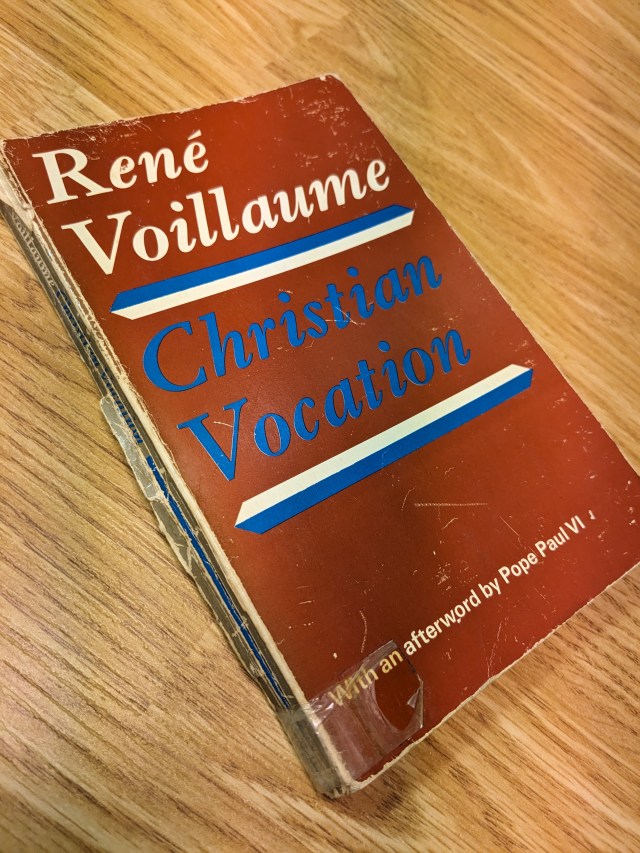
Literally: Retreat at the Vatican. English title: Christian Vocation.
Preached to Pope Saint Paul VI in 1968. Aside from having to do with prayer throughout, there’s quite a bit on the importance of “poverty of means” and the need for visible poverty.
“Poverty of means” is taken up from Jacques Maritain and translated into non-philosophical language, the kind of language you’d hear on a retreat. It means that there is a hierarchy of how heavy-laden the means we have at our disposal to undertake an action or a cause. The most evangelical means are poor. They are vulnerable. They are easily rewritten. There’s no force to them. Prayer, love, and intellectual means devoid of compulsion, force, or dissimulation (even preferring imagery and intuition to reasoning): these contain something special. They contain poverty in their potential or way of realizing a plan or idea. All they have is truth, love, and beauty, nothing more, nothing heavier, nothing more complex.
Visible poverty is stressed by Father Voillaume because people in our age respond to signs like these in order to truly understand the Gospel. This doesn’t mean that we can’t have any grand, beautiful things whatsoever. But it does mean that people truly respond to the sign of poverty, a Church that is not deliberately rich or engrossed. Even something “poor” here and there makes a difference for the modern person.
I think there is a very, very good chance that, despite the date, this is a book that young Jorge read assiduously. There is not only the aspect of signifying poverty and a Church of the poor, but there is also the emphasis on simpler, more evangelical means, and it is in this book that a definition of prayer first appears which seems to have fed into, in the long run, Pope Francis’ ideas about contemplation—whether consciously or not.
Of course, one might object that, if the Argentinian seminarian was studying theology until 1969, this book, published in France in January of that year, might not have been one he “constantly read.” That’s a reasonable criticism. The themes of the book would seem to call for a different assessment, and I find it hard to regard the setting at the Vatican as anything other than humorously providential. But the criticism has merit.
Then again, young Jorge Mario Bergoglio wasn’t ordained until December 13, 1969 (nearly a full year after the initial publication), and on top of that, I highly doubt he read an author “constantly,” then dropped him immediately after ordination. I think we can include this book as a potential component of our speculative bookshelf. It just fits. As far as alignment with the person Pope Francis became, there’s arguably more going for Retraite au Vatican than any other book on this list!





The issue of importation and translation
It is, of course, a whole other question which books you could get at a bookstore in Buenos Aires—and which ones would have been translated into Spanish. For what it is worth on this question, Au coeur des masses/Seeds of the Desert came out in English only in 1960 (ten years after the first French edition), Brothers of Men as early as 1966 (six years delay), and Christian Vocation in 1973 (four years). That’s not exactly promising.
On the other hand, young Jorge had contacts. He knew Little Brothers; he knew Arturo Paoli. It could simply be that he was provided books by the people he knew, eager to share their spirituality with a young Jesuit theology student. The pope is very comfortable in French nowadays, and I suppose (given how much Spanish I can muddle through without ever having tried to learn it) he would not have found the language to be a barrier, even if no translations had arrived in Argentinian bookstores at that time. We are, after all, sure in any case that he “constantly read” “the books of Voillaume.”
« En guise de conclusion » as René Voillaume would say
If I can make a personal note as a conclusion, I would say that this is a point at which Pope Francis and I coincide. Although we were worlds apart (and decades too), “the books of Voillaume” were also something that, in a period of formation and crisis, I “read constantly,” despite not being part of Father Voillaume’s religious communities. Pope Francis and I are very different people, but I feel like part of me understands how he must have felt. There is just such a big overlap here. There’s a common cause and belonging.
Why would Jorge Mario Bergoglio have “constantly read” these books when studying theology? I can tell you, these are books that can form you. They can provide foundation. They open vistas and possibilities. They meet you where you are. They spur you into territories hardly anyone else was advocating at the time (and which I found no one advocating in the mid-2000s in the Anglophone sphere, with its crazy obsession with apologetics, moralism, and the incomprehensibly named list of “non-negotiable values”). Here you can find evangelical simplicity. These are momentous books that you do not forget.
And among it all—here were to be found some ideas on what prayer is. At least one of these ideas Pope Francis was able to convert into something quite remarkable, which I don’t know if anyone else has ever quite done in that way before.
To get to this impressive transformation requires another blog post and a venture into one of the Holy Father’s apostolic exhortations—and I would be very surprised if you guessed which one!

 Contemplative in the Mud