
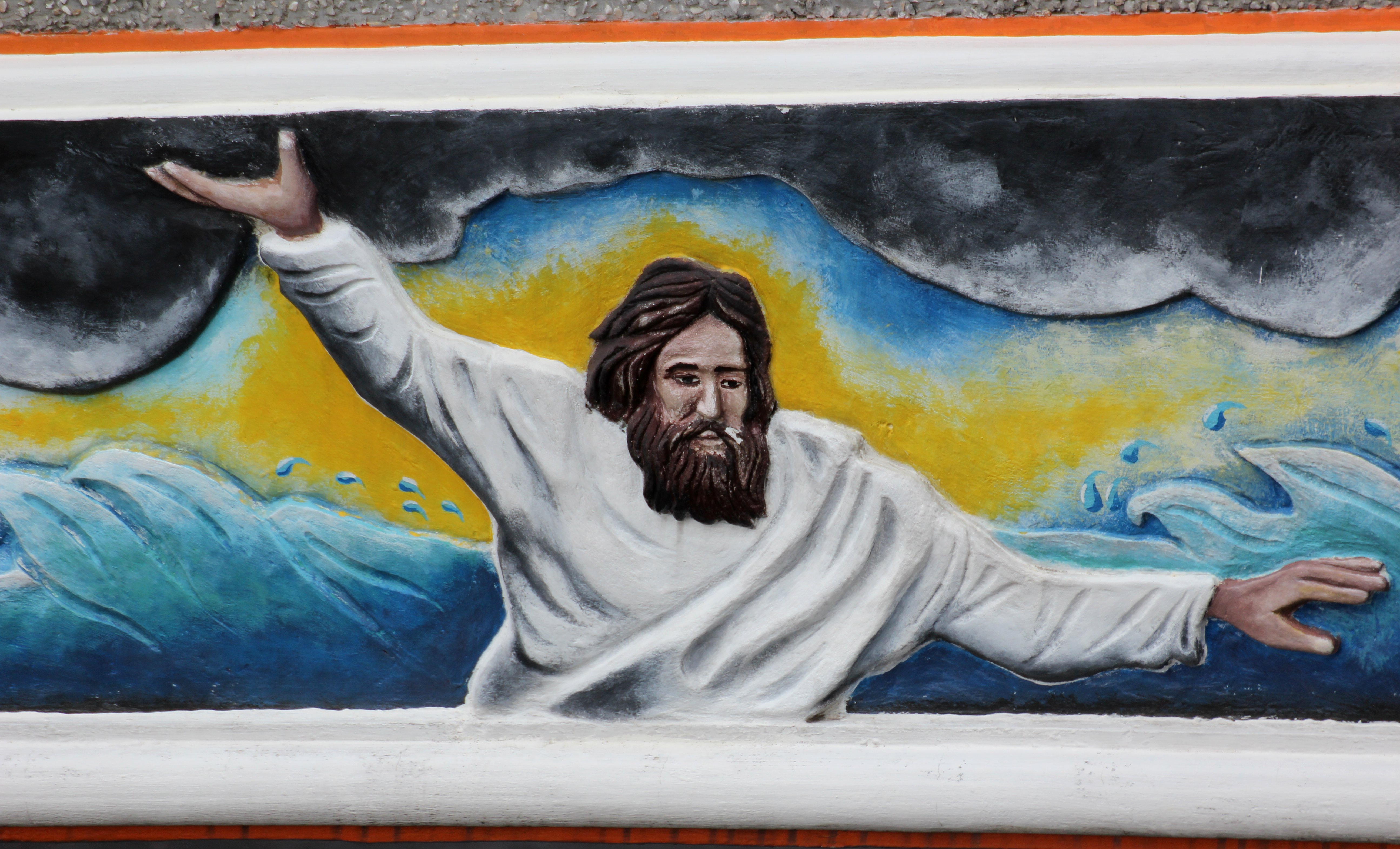
In the Easter Vigil, we always have a reading about the Creation of the world (Gen 1:1–2:2). God made light, made a dome in the sky, gathered the waters, made several lights in the sky of day and night, made creatures in the waters and in the dome of the sky, brought forth living creatures on the earth, and made humankind in the image of the Blessed Trinity.
Would it surprise you to know that, even at the very beginning of the Bible, the inherent nature of our spiritual journey – with its reality of meditation and its reality of contemplation and its distinction between the two and the progress from one to the other – is mentioned? That is the opinion of Saint Francis de Sales. In fact, he considers this a way of “great devotion” to recognize the difference between meditation and contemplation: to find it in the Book of Genesis.
What does this Doctor of the Church see? At the end of each day, God looks over the individual work, as one expression of the divine goodness and sees that is is good; this happens on the first day, on the second, third…
till at length, all the universe being accomplished, the divine meditation is changed as it were into contemplation… The different parts considered severally by manner of meditation were good, but beheld in one only regard together in form of contemplation, they were found very good: as many little brooks running together make a river, which carries greater freights than the multitude of the same brooks separately could do.
Contemplation is a single, simple view: “indeed, it was very good” (Gen 1:31). Meditation is piece-by-piece, examining one work at a time. It is less simple. It is – and what it sees is – still good! But it is more complicated. When all the pieces have been seen, or enough of them so that our will and our intellect come to want to rest in the simplicity of the whole, it is a simple view that predominates: and what the view is is – and what the view sees is – very good.
Contemplation is simple; meditation is piece-by-piece. Meditation involves a mental work to go from one piece to another – whatever those pieces may be: parts of creation, imaginings of incidents in the Saviour’s life, details of one particular mystery of Salvation, the words of a Hail Mary, a writing composed or read before the Blessed Sacrament. Contemplation sits and, with a divinely given simplicity, rest, and peace, sees something bigger and more together.
Having come this far, it is worth quoting briefly the advice of Francis on contemplation and meditation; he says, if you fall into simple contemplation of Jesus and the Trinity, don’t force yourself away from it and force yourself back to meditation, works of the mind, works of the will, efforts in prayer:
Wherefore, when you shall find yourself in this simple and pure filial confidence with our Lord [which is contemplation], stay there… without moving yourself to make sensible acts, either of the understanding or the will; for this simple love of confidence, and this love-sleep of your spirit in the arms of the Saviour, contains by excellence all that you go seeking hither and thither to satisfy your taste [in meditation]…
These are differences between meditation and contemplation.
And all this can be seen, says Francis, “with great devotion” in the Story of Creation.
Actually, in the Easter Vigil, we can go further. If I may say so, the whole structure of the Liturgy for the Easter Vigil reflects the structure of the Story of Creation – and thus reflects the structure of meditation and contemplation in the spiritual life. Why do I say this? The Old Testament readings enumerate several and individual events in the history of Salvation. Meanwhile, when the sanctuary is flooded with the simple light of the Gospel, everything condenses into one: Christ is risen. This is a reiteration of the Creation Story and of the meditative–contemplative spiritual journey: several, and then simplicity. And this does not detract from the History of Salvation or the enumerations of meditative understanding. Of course not! For they, too, “are good” like in the Genesis story. But are they “very good”? Well, that simple word, focused on the whole in a divinely given simplicity, comes for contemplation, and, in the overall structure of the Easter Vigil, for the Gospel.
The truths of contemplation are everywhere in the Church, if we look and know what to find.
Some related posts:
- What is the Difference Between Meditation and Contemplation?
- What is the Difference Between Meditation and Contemplation? (Revisited)
- What is the Difference Between Meditation and Contemplation? (Round Three)
- What is the Difference Between Meditation and Contemplation? (Fourth View)
- What is the Difference Between Meditation and Contemplation? (In Epiphany)


 Contemplative in the Mud