

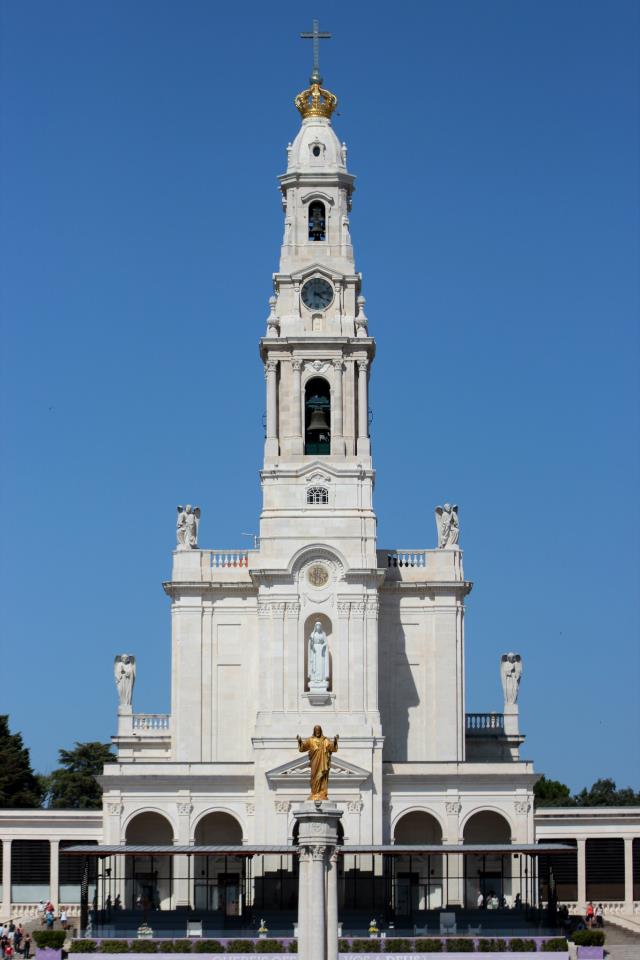
 Last year, I went to Lisbon for a conference. While I was there, I made a quick trip to Fátima.
I thought about writing a post about my trip. But I think the best thing to do is to to write about how what I learned on my trip relates to this blog. In other words, this is a post about Fátima and contemplation.
One of the things that always strikes me as an interesting contrast of the spiritual journey is our simultaneous caution against images, against visions, against phenomena in general (a common emphasis of Saint John of the Cross), and our simultaneous weakness and need to be supported by experiences and phenomena (a common emphasis of Saint Teresa). It sounds complicated. The reality is perhaps more simple than it sounds. We mustn’t chase or personally desire any phenomena or favours. But when they come, we mustn’t say they are not needed by us, either, for we are, quite simply, weak and unable to make it on our own strength. There is a contrast here. Spiritual stories have contrasts about given phenomena and phenomena that are not given.
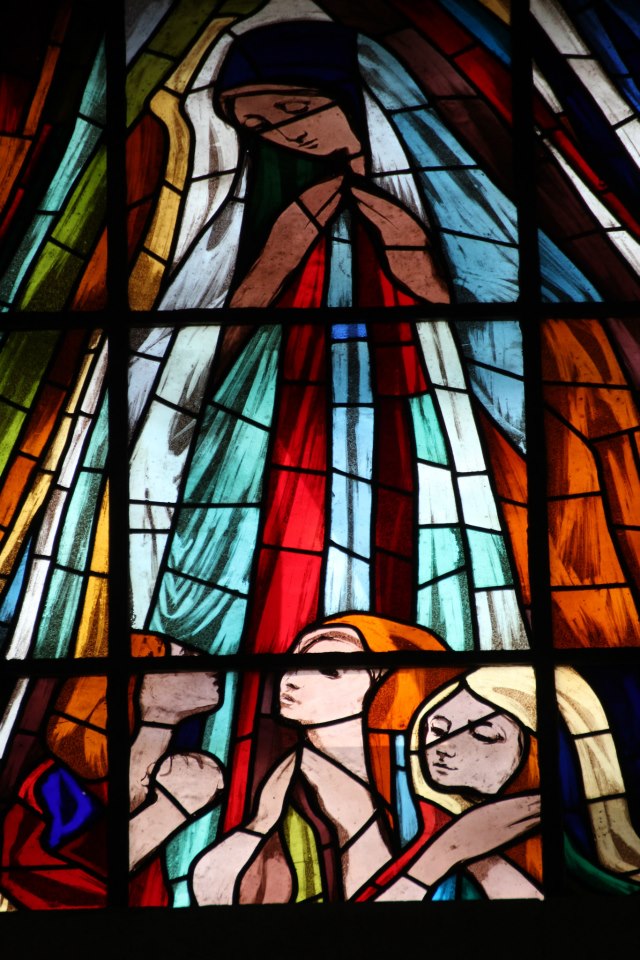 The thing about the Marian apparitions at Fátima is that the story of Blessed Francisco, one of the seers, is just one of those stories! His story has contrasts. He is strengthened by being able to see the apparitions. However, he doesn’t get to hear most of what Mother Mary says. He sees but he doesn’t hear. The locutions apparently just were not meant for him. They were given only to his sister Jacinta and their cousin Lucia. In Francisco’s story, there is that truth about phenomena: God gives, God doesn’t give, it is all providence and love. Nothing more, nothing less. We cannot predict. Who would have thought that Mother Mary would be heard by two of the children, but not the third? Who can claim to know, really know, why?
When I was in Fátima, I also picked up a short book What Happened at Fátima: The story retold for the 21st century by Leo Madigan. The story is told in a way that I think is accessible and understandable, without anything over-the-top. There is, in fact, one interesting chapter on the short life of Blessed Francisco at the end. His short life, the author says, is basically the short life of a contemplative soul. What does the author mean by that?
The contemplative soul is not looking for a life of ease, for an ongoing smorgasbord of spiritual delights. Nor is iot looking for dark nights and great tempests of the soul, nor for a sweet disposition, friends, an aura of sanctity, martyrdom, canonization. It is looking for its Creator to give itself to Him, a quest which be futile and vainglorious except that the Creator wants it oo, and runs the length of the universe to make Himself available…
Words like clever, entertaining, famous, haven’t got an entry in the contemplative’s lexicon. Fashion, excitement, novelty, are bizarre concepts. Love is the only word that identifies with The Word, the only word worth uttering and the only word worth listening to. To understand the motivation, the workings, the essence of contemplation, love is the word we must look up and ponder, but the only really satisfactory definition is in the loving.
 And why is this so close to the heart and story of Blessed Francisco?
Francisco, an illiterate peasant in ill-fitting trousers, who hadn’t reached adolescence and had never heard the word contemplative, met these criteria, through grace, and in doing so achieved that unique position his Creator had designed for him.
The more one studies Francisco the more clearly he comes into focus as a true contemplative. He couldn’t hear what the Lady said and expressed no desire to do so because for some reason she didn’t want him to. He didn’t fret about the reason; her will was enough and he abandoned himself to it.
All that is certain. Perhaps a bit more speculatively, the author adds,
The insults, disbelief, the misunderstanding of the neighbours no doubt affected him as much as they did Lucia and Jacinta, but Lucia records no memorable comment from Francisco on the subject because, we might assume, he was too preoccupied in burning his humiliation as fuel to console the offended Jesus.
Indeed, little Francisco was buried in his humiliation and his love. This seems rather a given from the stories and anecdotes we have. He is strong, but he is quiet. He doesn’t fidget; he goes straight to the questions of heaven, what the Church of Heaven wants. Worldly ambition? No. Memorable complaints? No. Mentioned concern that he didn’t hear Mother Mary’s words? No. In all that, his life reads like a page from the Dark Night and the Ascent of Saint John of the Cross: nothing nothing nothing; on the mountain, nothing; detachment.
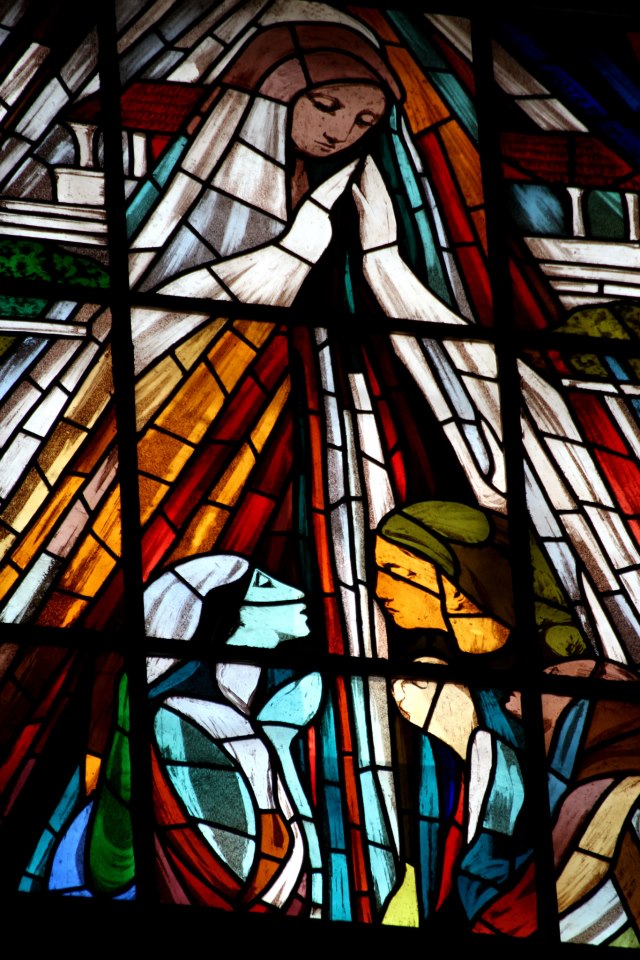 All there is for Francisco is
his own assumption that he is the least important of the [three Fátima] seers, [and] this conforms with a mentality prescribed by St. Benedict for the formation of contemplatives.
Francisco’s lack of self-interest, together with his secret prayer life, are of a piece with the prototypes of the Christian contemplatives like Benedict Joseph Labre, Charles de Foucauld, and Thérèse Martin. The symptoms are the same. The thirst for solitude, the hours hidden camouflaged in prayer, the absorption in the Divine that goes unremarked by those around because of the veil of paradox, the veil that enables the contemplative to disappear into prayer, into the very wood of the cross, to contemplative the sun at midnight [not only in a miracle] and to stake all on a Virgin with a child.
Little Francisco, who died before his eleventh birthday: who was he? A contemplative soul. Children can be on the path, too. The Gospel is for all, and the Gospel proclaims, in coherence with the work of God in the Hebrew people, the special place of children in the workings of salvation. The Gospel is not an impossibility that demands children to be something other than they are. That’s what little Francisco shows us. In that, he has a lot in common with his near-contemporaries Thérèse, who went before him into heaven, and Marcel Văn, who came after. Children: contemplatives they can be. And here, in little Francisco, they can teach us a lot about the major strokes needed from us, given to us, and stoked in us by the fire of Divine Love.


 Contemplative in the Mud