
Dogma – unpopular word – is a constituent of the progress of the Church on earth. The divine deposit was given once for all with Jesus and transmitted in human words with the Apostles, and will not be altered or surpassed by anything spoken or written since. However, dogmas develop. We make truths of the faith more explicit and conceptualized, through confrontation with error and through deeper understandings of truths. What was implicit in the revelation of Jesus and the words of the Apostles becomes explicit with time.
That’s dogma.
It is inseparable from Christian contemplation. If we didn’t know what was true, how could we get lost in the Truth? If we didn’t have conceptual guide posts, how could we rely, for any length of time, in knowledge without concepts? If we didn’t have a outline map of the Father’s house, how could we know where it is safe for the “natural man” to fall asleep?
Dogma is inseparable from contemplative love. What happens in the simplicity of contemplation is not that dogma is surpassed, but rather that, the person knows that there is truth in the revealed mysteries and in the explicit words used to bring them to us, but more truth than they can express. It is the overflow of meaning that is experienced, not the lack of meaning. Charles Cardinal Journet writes that, in contemplation,
conceptual knowledge of revealed truths is not in any way laid aside, or in any way got rid of, it is merely for the moment covered over. All the dogmas thus subsist in the faith of the contemplative, but like the stars in the midday sunlight.
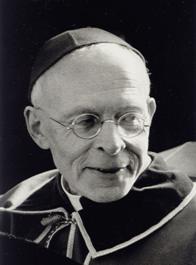
They have seemed to disappear like stars at noon-hour. But –
In fact they are never so necessarily, so effectively present. The passing light which throws them into the shade strengthens them to a wonderful degree. When it withdraws, they reappear like stars in the evening sky, but invested with, and illuminated by, a little bit of its brightness.
After they are covered with the yet-simpler light of the sun, we understand their light better. Their light is more connatural to us. It is more understandable to us – but deeper, too.
Dogma gives the only outline of where it is safe to lay our head in contemplation. Contemplation strengthens the intensity of the meaning of the words of dogma. The map of dogma becomes clearer and more easily followed. Contemplation again can strengthen the intensity of the loved truth. And so the cycle can spiral out of control – in Love.
Some related posts:


 Contemplative in the Mud